top of page
All posts


Poplar pen blanks, an inexpensive solution for beginners and experts alike!
Poplar is considered an excellent choice for pen blanks, particularly for practicing or creating unique designs. Although not the hardest wood, woodturners appreciate it for its specific qualities : Ease of machining: It is a soft and very light wood with a fine grain that cuts and turns very easily, more forgiving of mistakes. Ideal for learning: Its homogeneous and soft texture makes it a perfect material for learning turning techniques before moving on to more expensive or
sass02
Jul 71 min read


Bookmatching
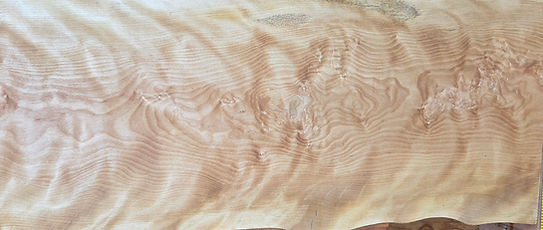
Bouleau jaune (merisier) "Bookmatch" Bookmatching wood is a technique where two sequential slices from the same log are opened like the pages of a book and joined side-by-side. This creates a stunning, symmetrical mirror image of the grain, resulting in a dramatic and visually continuous pattern. How It Works The Cut: Instead of cutting planks continuously off the top of a log like traditional lumber, a woodworker resaws a thicker board down its thickness or uses two consecut
sass02
Jun 262 min read


Turning blocks, the dimensions.
In the industry, blocks of wood for turning (also called blanks or billets) do not have a universal and strict manufacturing standard, but they do follow popular formats. The dimensions vary depending on the type of project (pens, bowls, or spindles). Here are the most common formats, often sold by specialist shops: For pens and small items Dimensions: 3/4" x 3/4", 1" x 1", 1 1/2" x 1 1/2" and 2" × 2" (approx. 19 × 19 mm to 50 × 50 mm). Length: 5" to 12" (approx. 12.5 cm to 3
sass02
Jun 61 min read


Making a coffee table from a live edge slab.
(Comments are welcome) Making a live-edge coffee table is a rewarding project that showcases the raw beauty of wood. Here are the main steps, from selecting the tabletop to finishing , based on DIY woodworking techniques. 1. Wood selection and preparation (Tabletop) Choosing the slab: Select a slab of wood (yellow birch, maple, cherry, oak, pine) with or without the bark. Dry the wood: Ensure that the wood is thoroughly kiln-dried (moisture content below 10-12%) to prevent su
sass02
May 152 min read


What sealant should we use for a "live edge" wooden deli board?
For a live edge (natural edge) wooden charcuterie board, the best sealant should be food-grade , moisture-resistant, and enhance the natural beauty of the wood, especially on the bark. Here are the best options, ranked by effectiveness: 1. The Best Choice (Durability and Appearance): Hardwax Oil Hard oil-waxes, such as Rubio Monocoat or Osmo TopOil, are considered the top of the line for serving boards and countertops. Why: They penetrate the wood while leaving a protective l
sass02
May 22 min read


Canadian Noble Woods: Can "Subjective Nobility" complement "Technical Nobility"? What is your opinion?
The official criteria (the technical "Nobility") For forestry and cabinetmaking professionals in Canada, a wood is considered "noble" if it meets specific criteria of economic value , durability and rarity . Although the term "Noble" is sometimes subjective, professionals rely on four specific technical pillars: 1. Hardness and density (Janka test) Nobility is often synonymous with resistance. Noble woods are almost exclusively hardwoods , characterized by slow growth (which
sass02
Apr 152 min read
Canadian Noble Woods: An Exploration of Species and Their Uses
Canada is renowned for the richness and diversity of its forests, offering an impressive variety of fine woods. These species, prized for their beauty, durability, and versatility, are central to many craft and industrial projects. Whether you're a woodworking enthusiast, a cabinetmaker, or a passionate DIYer, understanding the characteristics and uses of Canadian hardwoods will help you choose the right material for your creations. Yellow birch The main species of hardwood i
sass02
Apr 73 min read
bottom of page